

Surviving the Dream
- Shannay Porter
- Apr 12, 2023
- 4 min read

Updated: Mar 12, 2025
Mental Health and the Immigrant Experience

Moving to a new country and moving to go to college are two very isolating experiences that
when combined may be detrimental to an individual’s mental health.
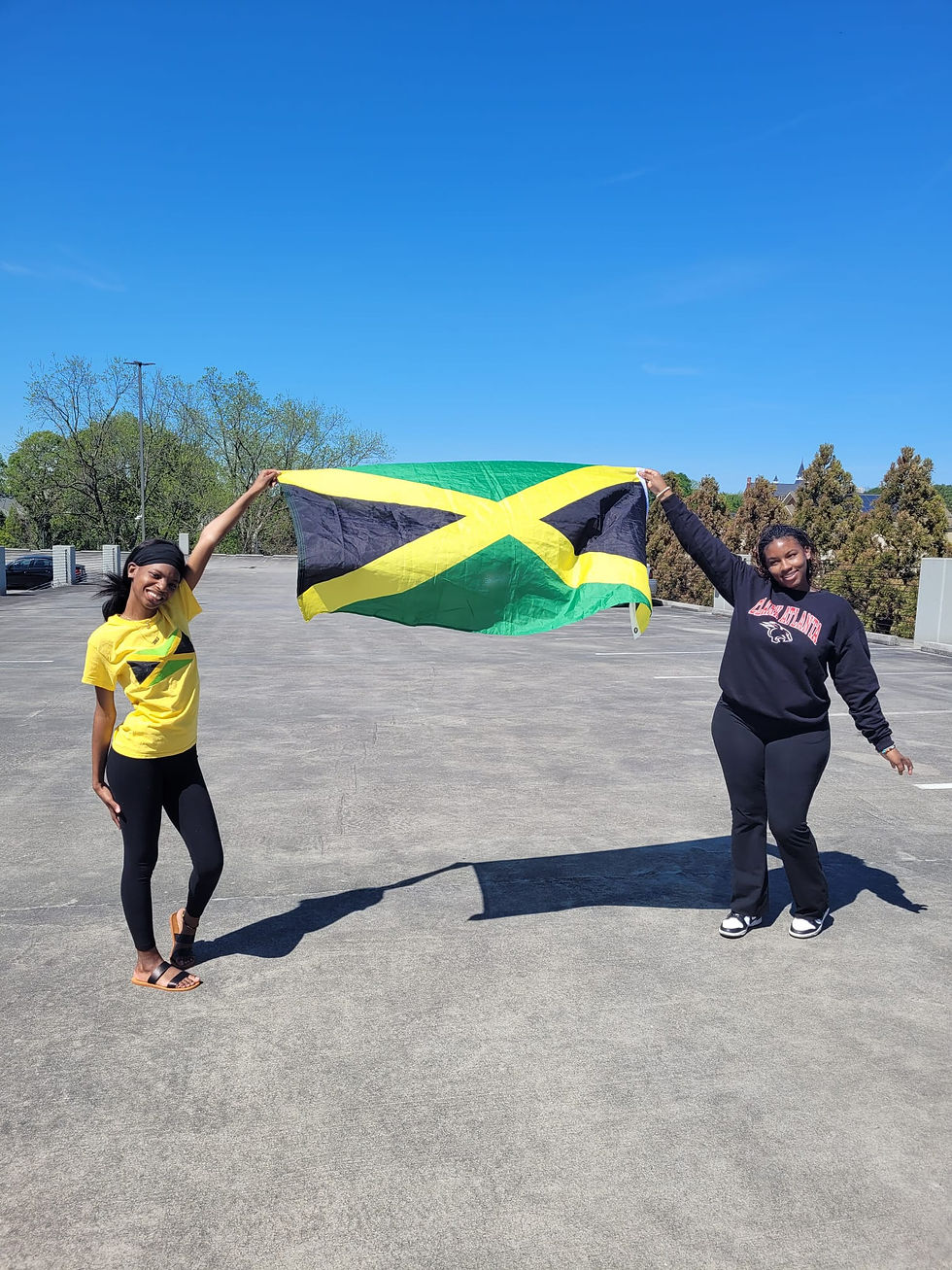
Jamaican students who move to the United States to attend Clark Atlanta University have
varying experiences where some students are positively affected while others are negatively affected. The venture of moving can be exciting like all new things in life are, however, it also can be equally scary. According to Imagine Health, many immigrants experience anxiety and/or depression when moving to new countries as they face the stress of adjusting to
a new culture, the long distance between them and their families, homesickness, and language barriers.
Britannia Croll, a CAU freshman describes her experience stating, “Living in the United States has affected my mental health drastically simply because it’s a different environment
with different cultures and different people. Having to adapt to such a difference is not only challenging physically but mentally. I had to learn how to adapt and navigate change the way
I live my everyday life just to fit in and that took a toll on my mental health.”
CAU junior, Morgan Salmon also describes her experience saying, “I have learned that I am happier and more mentally stable at home around people I relate to more and with great-
er access to the things I really need.”
While Croll and Salmon were negatively affected by their move to America, Lionae Heron, another CAU student explains that her mental health was kept intact as she had always wanted to leave home.
Like all immigrants who are far away from home these Jamaican students at CAU have to develop methods of keeping in touch with their family and friends back home to remedy homesickness. Two of the most popular ways that Jamaican students cope with feeling homesick are by calling home or visiting home.
Salmon states that she keeps in contact with her family and friends through daily text messages and weekly video calls.
Croll also describes how she deals with missing home stating, “Feeling homesick is something I feel ever so often. One of the ways I cope with feeling homesick is by calling family back home or re-watching memories that were filmed while home.”
Latanya Porter, a CAU business major, states that she talks to her mom in Jamaica as well as listens to Jamaican music and watches videos of her life in Jamaica. Porter also uses social media as means of remeding homesickness by watching Jamaican content creators.
Though calling or video-calling home is the quickest and most cost-effective method of being with family and friends, travelling back to Jamaica is the best method of curing homesickness. Many Jamaicans look forward to trips back home as they can reunite with loved ones, become reacquainted with their island home, and be relieved of the stress of being an immigrant. However, travelling back home is increasingly becoming a stressful op-
tion as ticket prices continue to rise.
Croll describes her experience stating, “I don’t visit Jamaica as often as I’d like simply because plane tickets are so high. As of recently, I only visited Jamaica for Christmas.”
Though life as an immigrant and a college student in the United States is not easy, many
Jamaican students find the experience to be worth it as they are pursuing better futures for themselves. Some Jamaican students have plans to live out their futures in the United States while others prefer to return home after their matriculation at Clark Atlanta University.
Heron discusses her plans stating, “The U.S. has far better opportunities rather than trying to survive in Jamaica. I’m living in the U.S.”
Croll gave an opposing statement saying, “I do not see myself living in the United States full time. I didn’t come to the United States to live full time. I came here for an opportunity for a better future for myself, my family and the family that I will have in the future. After obtaining all my goals in America, I hope to move back to Jamaica and build a home of my own.”
Salmon also added her plans stating, “If I were to live in the U.S. full time, it would be while I am young and trying to build a life for myself. I would move home to raise a family and enjoy my older days.”
Salmon then added her aspirations stating, “I hope to become an attorney at law in the future and be able to practice in multiple jurisdictions. I would love to get married and have at least two children.”
Croll also discussed her future stating, “I aspire to graduate from college and further my
education in the medical field, become a certified nurse, anesthesiologist or a CRNA. Once I’m financially stable, I hope to marry the love of my life and start a family.”
Heron added that her hopes are to become a lawyer and to be of service to her family in Jamaica, while Porter aspires to open multiple restaurants.
Jade Davis, U.S. citizen and CAU student gives advice to Jamaican students struggling with mental health stating, “Find a way or make one is the motto to live by, never let anything get in the way of your purpose and your reason why.”
Salmon, who is almost at the end of her academic career at CAU reflects on her growth since living in America stating, ‘I think I’ve adapted pretty well being in the U.S. especially considering I travelled here quite often before moving for school. I find myself to be more
confident, independent, and fearless. I’m more open to friendships and meeting people as well. I’ve learned a lot about the Black-American culture and have found many ways in which
it links to my Caribbean culture.”
Like Salmon, other Jamaican students will find their way as they continue to grow and adjust to life in the United States.
Comments