

Taking on the American Dream at CAU
- Shannay Porter
- Apr 12, 2023
- 5 min read

Updated: Mar 12, 2025
How living in the U.S. affects Jamaican students
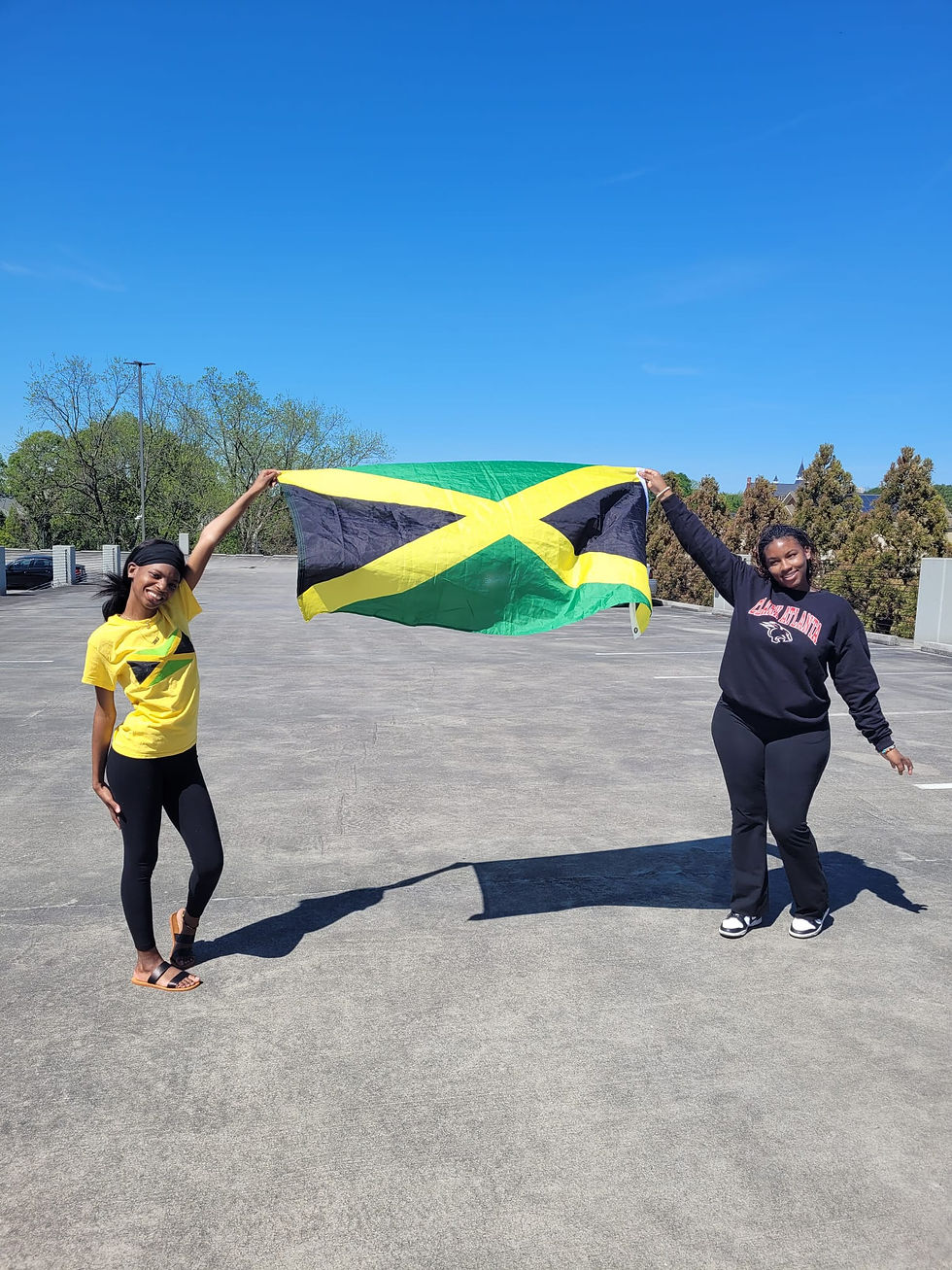
You have made it to the United States where you will embark on a new journey at Clark Atlanta University and you are excited for the future, but the land of opportunity is not easy to navigate.
Culture shock is setting in, and the drastic differences between Jamaica and America are becoming more apparent. Some of the cultural differences are surprising
while others are expected, however you will try your best to navigate this new country as you pursue higher education and other goals.
Jamaican students attending Clark Atlanta University face many different struggles, such as
communication barriers, limited access to authentic food, lost contact with home, and dealing with Americans not being aware of their culture,e which negatively affect them as
they work towards earning their degrees and accomplishing their goals.
While facing these challenges, Jamaican students have had to push forward and focus on their reasons for being in America rather than the downsides to being in America. For
For many Jamaican students, the opportunity to study abroad is amazing, as many Jamaicans believe higher education can help them escape poverty.
Jamaicans acknowledge that while the island is beautiful with a rich history and culture, opportunities are few; therefore, going abroad to countries such as the U.S. and the U.K. is
the best option. However, this trend of Jamaicans leaving the country has caused Jamaica to experience a brain drain as some people do not return to live in Jamaica and make these new countries their permanent homes.
Jamaican students who make the choice to attend university in the United States have a unique experience to other Jamaicans who come to America for seasonal jobs. These Jamaican students are often young, and some may or may not have travelled to the United States before, however, many of their experiences are very similar.
One of the greatest struggles that Jamaican students at CAU face is communication. Though Jamaicans speak English, and it is the country’s official language, they also speak
a native dialect, Patois, and they have a heavy Caribbean accent. Jamaicans speaking English in the United States have often been met with other people mocking their accent as well as faced with criticism that the English they are speaking isn’t “proper.”
Lionae Heron, a CAU freshman, states that the greatest struggle she faced while being in America is communication, “Many do not understand what I
am saying because of the accent.”
Another CAU freshman, Britannia Croll, explained that she felt like she had to hide her authentic self and her accent when she wanted to fit into certain non-Caribbean spaces.
Another struggle that Jamaican students at Clark Atlanta University face is accessing
authentic Jamaican foods such as cooked meals, seasonings, fruits, ground provisions, or snacks.
While the United States is known to be a melting pot of cultures, finding authentic Jamaican restaurants and grocery stores is not easy. Many students prefer to bring food from the island, and when their supply runs out, they shop at stores such as Walmart that have select items. However, some students must adapt to eating the food provided to them in the university’s cafeteria because of financial challenges.

Jamaican students at CAU also face difficulties with maintaining relationships with their family and friends in Jamaica. Some students may immediately start to feel the isolation that comes with moving to a new country and may be hesitant to communicate their feelings
to loved ones back home because they don’t want them to worry. For other students, the physical distance between friends and family may also cause an emotional distance, which
may make students feel even more isolated. Heron describes her experience stating, “Coming to America has caused me to stop communicating with many of my friends, however, my family has been quite supportive.”
While some students may experience growth away from loved ones in Jamaica, others may develop different ways to maintain a strong connection with their loved ones in Jamaica. Morgan Salmon describes how she maintains relationships with family and friends stating, “For the most part, I still have a great relationship with majority of my friends and family. Because of the distance though, I connect way less with some of my longtime friends.
I think we now have a better understanding of how being apart can impact our friendships so we always make yearly plans to meet up in order to keep the link.”
Jamaican students at CAU also have to deal with many Americans who don’t know about Jamaican culture, food, and people. This places students in environments where they are
constantly having to explain themselves and their culture to others which can be exhausting.
Salmon explains her experience stating, “I wish I knew that Americans were very ignorant to cultures that exist outside of their bubble, it would save me a lot of over-explaining and teaching.”
Heron also advises other Jamaican students saying, “If you’re leaving Jamaica to come to CAU expect a culture shock and ignorant people.”
Jade Davis, an American CAU student, gives her perspective on Jamaican students at CAU stating, “I think the struggles Jamaican students face in the U.S. are very difficult but through all adversities, they still overcome each barrier. I have also learned so much more about Jamaican culture from observing how my friends interact with each other, other Jamaicans and their families.”
Despite the struggles that they have faced Jamaican students at CAU continue to prosper and push themselves. Croll leaves encouraging words for incoming students stating, “One advice I’d give to Jamaicans coming to a university in the United States, specifically CAU is to be your authentic self. Don’t be afraid to showthe world who you are, be proud of where you’re from, be proud of your accent and just reach for your goals.”
Salmon also shared her advice to incoming Jamaicans saying, “Being honest, I would not
recommend CAU for international students because our population is very small and I believe we are often overlooked by administration and our needs are not fulfilled. If you’re coming to the U.S. be open to new experiences and a new culture. Step out of your comfort zone and never hide who you truly are. Make as many connections as you can with anyone who has roots similar to yours and remember the world is your oyster.”
Like these Jamaican students you may face some of these struggles at CAU, however it is crucial that you continue to actively pursue your goals and maintain your integrity as these students are doing.

Comments